
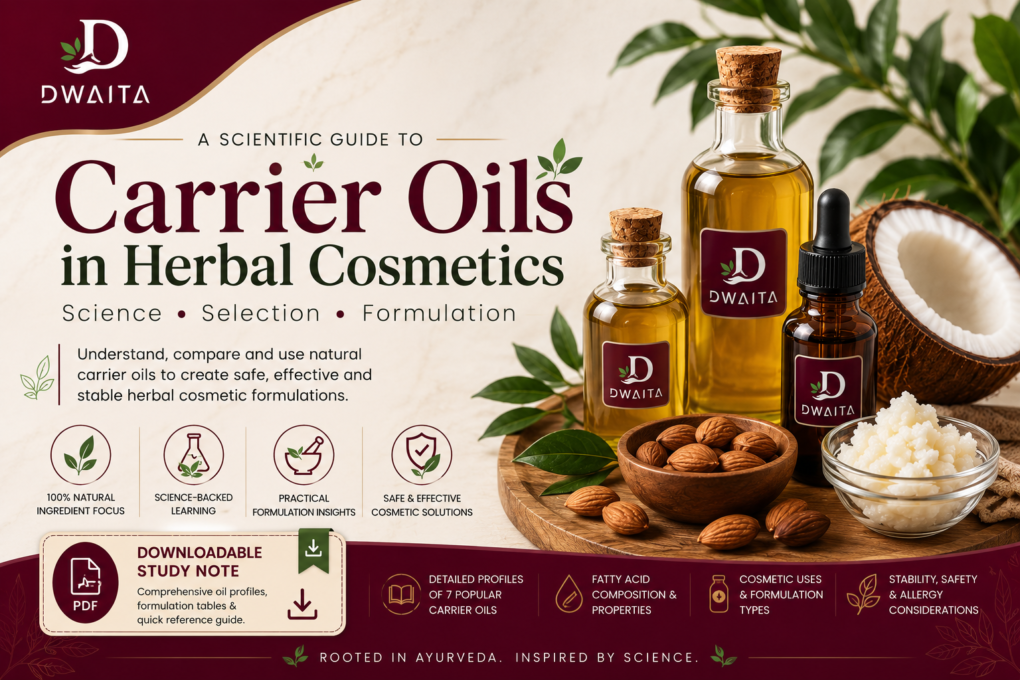
Mastering Carrier Oils: A Scientific Guide to Herbal Cosmetic Formulation

Categories: formulation, Skincare
Wishlist Share

About Course

This course provides a scientific introduction to carrier oils, also known as base oils, and their role in herbal cosmetic formulation. You will learn how fatty-acid composition, unsaponifiable compounds, texture, absorption, oxidative stability, and shelf-life influence the performance and selection of carrier oils.

The course covers seven popular carrier oils in detail: Argan Oil, Sweet Almond Oil, Coconut Oil, Jojoba Oil, Sunflower Oil, Rosehip Seed Oil, and Wheat Germ Oil. For each oil, you will explore its botanical source, extraction method, fatty-acid profile, cosmetic applications, hair and scalp uses, formulation types, stability, typical cosmetic-use concentration, and allergy or safety considerations.

You will also learn how to compare different carrier oils and critically evaluate cosmetic claims by distinguishing between well-established scientific evidence, emerging evidence, traditional uses, and marketing claims.

Show More

What Will You Learn?

  • By the end of this course, you will be able to:
  • 1. Understand what carrier oils are and their role in herbal cosmetics.
  • 2. Explain how fatty-acid composition influences carrier-oil properties.
  • 3. Differentiate between saturated, monounsaturated, and polyunsaturated fatty acids.
  • 4. Understand the role of unsaponifiable compounds and other minor components.
  • 5. Evaluate texture, spreadability, and absorption characteristics.
  • 6. Understand oxidative stability, rancidity, and shelf-life considerations.
  • 7. Identify the botanical sources and extraction methods of seven popular carrier oils.
  • 8. Understand the composition and cosmetic applications of Argan, Sweet Almond, Coconut, Jojoba, Sunflower, Rosehip Seed, and Wheat Germ oils.
  • 9. Compare carrier oils based on their composition, texture, absorption, stability, and cosmetic applications.
  • 10. Select suitable carrier oils based on formulation requirements.
  • Understand general cosmetic-use concentration guidance.
  • 11. Distinguish established scientific evidence from emerging evidence, traditional use, and marketing claims.
  • 12. Apply responsible principles when developing and communicating cosmetic products.

Course Content

Introduction to Carrier Oils
Understand the fundamentals of carrier oils and their importance in herbal cosmetic formulation. 1. What Are Carrier Oils? 2. Carrier Oils vs Essential Oils 3. Role of Carrier Oils in Herbal Cosmetics

  • What Are Carrier Oils?
  • Carrier Oils vs Essential Oils
  • Role of Carrier Oils in Herbal Cosmetics

Understanding Carrier Oil Properties
Learn how the chemical and physical properties of carrier oils influence their cosmetic performance.

Stability & Shelf Life
Understand oxidation, stability, storage, and the factors that determine the shelf life of carrier oils.

Argan Oil
Explore the botanical source, composition, applications, formulation uses, stability, and safety of Argan Oil.

Sweet Almond Oil
Discover the properties and cosmetic applications of Sweet Almond Oil, including its formulation and safety considerations.

Coconut Oil
Understand Coconut Oil's distinctive fatty-acid profile, physical properties, cosmetic uses, and formulation applications.

Jojoba Oil
Explore the unique wax-ester structure of Jojoba Oil and its applications in skin, hair, and cosmetic formulations.

Sunflower Oil
Learn how Sunflower Oil's fatty-acid profile varies between varieties and how this affects cosmetic applications and stability.

Rosehip Seed Oil
Explore the composition, cosmetic applications, oxidative sensitivity, and formulation considerations of Rosehip Seed Oil.

Wheat Germ Oil
Understand Wheat Germ Oil's nutrient-rich composition, cosmetic applications, stability, and important safety considerations.

Comparing & Selecting Carrier Oils
Compare the seven carrier oils and learn how to select an appropriate oil based on formulation requirements.

Evidence, Claims & Responsible Formulation
Learn to distinguish scientific evidence from emerging research, traditional use, and unsupported marketing claims.

note